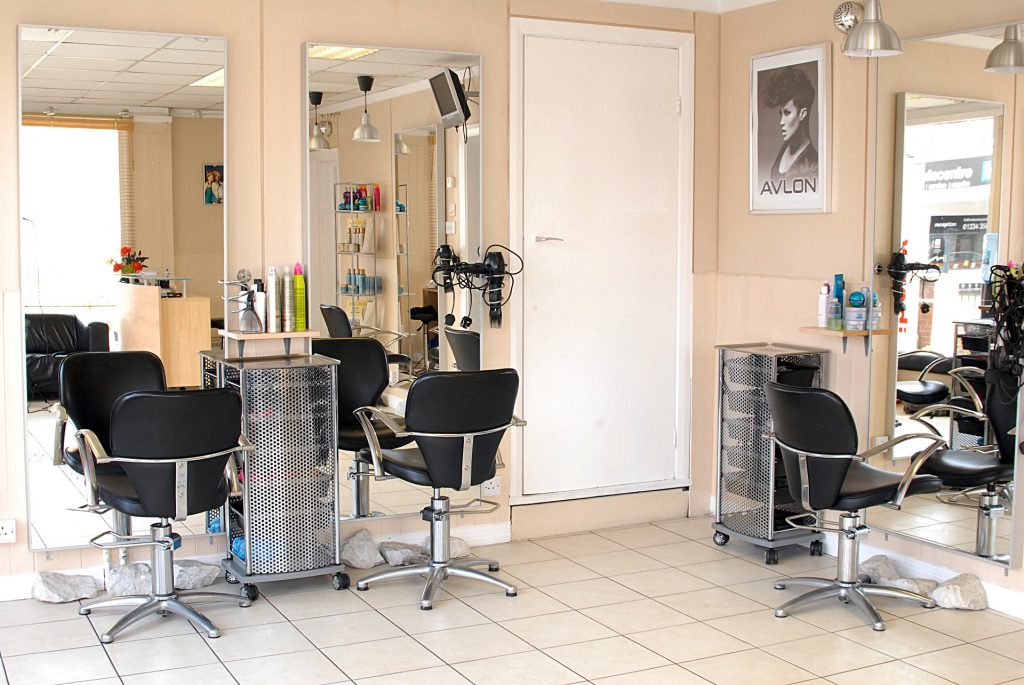
I’m talking today to hairdressers and salon owners, and those working with others to deliver their services. It is becoming increasingly challenging to know what you need to be aware of when looking at the legal, employment and contractual risks of offering a role to a hairdresser working within your business.
And, just as importantly, to know where to go for help and advice on this.
Well, obviously straight to Stanford Gould, but bear with us as we explain why…
A recent case (reported in July 2020) has clarified some of the issues around self employed hairdressers and beauticians who work in salons – often with very little contractual paperwork to set out how they work, and their employment status. The reality is, it has so often been a ‘trust’ thing; for hairdressers and salon owners, often a working pattern has been established over a long period. This can mean there are high levels of informality in the arrangements. Well, I’m sorry to say that in light of a recent court decision, you salon owners might need to think again if you want to be protected and limit your risk.
You can read more about the facts of the case and the legal issues for hairdressers and salon owners in this fab blog by our lovely fellow lawyers at Nelsons Solicitors in Nottingham, but here it is in a nutshell. Ms Gorman worked in a salon which controlled her working hours, which clients she saw, how she was paid and what time off she was allowed to take, as well as the prices she charged to customers. It was a very typical scenario. She had a written contract for services with the salon owner saying she was self-employed, but the Tribunal looked beyond that. After investigating what was actually happening in her working arrangements, the Tribunal ruled that because the salon was exercising a very high degree of control over her activities, she was, in fact, an employee.
Why is this important? Two main reasons:
ONE) Because employees not only have to be treated differently for tax (so HMRC were watching carefully and had a particular interest in this case)…
TWO) perhaps more importantly, an employed person has additional rights; to holidays, rest periods, sick leave, and not to be unfairly dismissed. There are lots of benefits for a worker. In fact, this case wasn’t brought by the tax man – it was brought by Ms Gorman herself who wanted to be declared an employee, presumably having been unable to persuade the salon owner to make her so, and to thus claim some of those rights.
So for salon owners there’s a double risk – firstly, from HMRC who are keeping a close eye on the use of contracts for services and pseudo self-employed status. It costs the Treasury significant sums in lost tax revenue every year (and new so called IR35 rules tightening have been postponed for implementation from summer 2020 to 2021 – more of this later next year). Secondly, your workers might be looking for better terms and conditions of their work and actively seeking out employed status for some of the perks it offers.
The lesson? Take advice! Get the right contracts in place, which properly reflect your situation and your workers’ rights and responsibilities. We have some fabulous low cost templates for hairdressers and salon owners available through our sister company Stanford Gould Limited – so go check them out here and make sure you are reducing your risk as far as you can.
If you are a makeup artist or hairstylist looking for contracts, you’re better off here!
This week’s blog about wedding supplier contracts is brought to you by Katherine Howe, The Wedding Industry PA. Hello, that’s me! I am here to tell you how I restructured my wedding business and in doing so, had to sure up my terms and conditions and supplier contracts simply, quickly and reliably.
2020 has been a year that has seen many business owners in the wedding industry adapting their offerings to suit the new social and economical climate. Pivoting. Its the word of the year. If that’s something on your agenda, it’s vital to ensure that your wedding supplier contracts still function as solid legal documents to exchange with your new clients.
The Wedding Industry PA is a sector-specific outsourcing service, in which I virtually and physically assist wedding professionals to allow them the time and freedom to focus on their talents and creativity. My services range from blogging and social media management to general administrative tasks, as well as in-person on-the-day support at weddings for wedding planners and suppliers. However, I arrived here after beginning my career in the industry as a wedding planner.
Whilst running my wedding planning business it began to dawn on me that my favourite parts of the job (and the ones I was best at!) were the ‘behind-the-scenes’ tasks, and I started taking on other wedding professionals’ blog pages, auditing websites and securing monthly retainer contracts for regular admin work.
As you can probably imagine, the wedding season of 2020 saw my wedding planning business reach a tipping point and I had a decision to make. I took my opportunity to launch The Wedding Industry PA, feeling the desire to help my community of talented wedding suppliers more so than ever. Among the many considerations involved in this decision, I found myself in need of new wedding supplier contracts and terms and conditions. The documents I held for my wedding planning business no longer covered me for the work I was going to be doing, so I turned to Heather at Stanford Gould for advice.
It took one simple email exchange and I was pointed in the right direction – templates for wedding supplier contracts on the Stanford Gould Online website. In a matter of minutes I downloaded the ‘virtual assistant’ template recommended to me, and after a few small tweaks I was set up with a new, legally watertight, functioning set of Terms & Conditions for my VA business.
If you have had a similar experience this year and have in some way changed your wedding industry business offering, I urge you to consider your legal documentation. Now more than ever it is so important to be confident in your Terms and Conditions and contracts you send out to clients. As the ever-evolving picture of the world remains so uncertain, Stanford Gould’s contract templates for small businesses are a simple and reliable way to bring some certainty and security to your business plans.
In the current unknown climate for the wedding industry, many are looking at their income streams and seeing what options they may have to maximise their income and diversify their work to bolster their business. Don’t see this as a failure of your self-employed dream – look at it as an opportunity to gain wider experience and perhaps have a portfolio career.
What Is A Portfolio Career?
A portfolio career is where someone may have many roles and do a number of part-time ‘jobs’ which may be a mix of employed roles, freelancing, and self-employed tasks. There are no limitations (save time and headspace) to how many or what combination of these roles you can have, subject to a few simple rules…
If You Are Employed…
If you are employed, you are paid PAYE and tax is deducted from the source by your employer. You may also need to pay national insurance contributions and pension deductions (the rules are complex so take advice… see our fabulous “in house” expert options below) You will have some form of a written statement of the terms of your employment, and have certain rights as an employee. Take care here as the rules changed on this recently… see here.
If You Are Self Employed…
If you are self-employed, you need to declare your income to the Inland Revenue and complete a tax return calculating your income, expenditure, and ultimately how much tax you are required to pay. Bear in mind that you can earn a minimum sum of £1,000.00 before you need to register as self-employed – here’s a handy guide to start you off.
A Portfolio Career If You’re A Freelancer…
If you work freelance, you may provide services to a single other business or many – under a contract for services and then invoice them for your work. You would also be classed as self-employed. This may be an attractive option for wedding suppliers looking for more ‘hands on deck’ work as next year unfolds. Wedding venues in particular will likely be looking for support staff and help to deliver the events postponed into 2021. You might not do what you do in your business, but knowing the industry will be helpful.
‘Side Hustles’
Many wedding suppliers started their businesses as a ‘side hustle’. I have personally never been a fan of that term as it always suggested it was something less than professional or intentional. For many, it was simply the first step of the plan. But if you are looking to diversify where your income is drawn from at this time, adding a paid employment role – if only a few hours per week – or freelancing with another business for short time to help them deliver all those postponed services in 2021 – might be a great way through the next uncertain year.
Expert Advice On Portfolio Careers
Our ‘Your Legal Fairy Godmother’ group on Facebook has THE Events and Weddings HR specialist Sonia Marie Palmer of Event HR this month (October 2020) as a guest speaker and contributor. Be sure to make the most of her expertise if you are looking at taking on any additional help or collaborating with other suppliers in a new way to deliver your work next year – to ensure you have the bases covered. She also has templates for workers available on her website to help you set up what you need to be HR compliant!
You want to know that a product/service is good before you buy it, right? You may ask a friend for a recommendation, read reviews, or look at a website like Trustpilot. This is exactly why customer testimonials are important – and, surprisingly, it’s a trick that lots of businesses miss! Here are some reasons why you should gather testimonials and shout about them:
Content For Your Website
We all know the importance of creating fresh and regular ‘content’. Having reviews on your website is exactly that! Customer testimonials can be spread out across your website, or on a dedicated page. This automatically makes your website look professional, reputable, and reliable.
Look Busy & Prove That You Know Your Stuff
Reviews are proof that you can deliver great products/services. Use them to demonstrate how professional and knowledgable you are. Having some ‘human-ness’ on your website helps with relatability, and can even be used to show who your ideal clients are, to attract more of the same.
Convert Website Visitors Into Buyers
This is the main goal at hand! Customer testimonials help to turn curious visitors into spending clients – fact!
Show Your Social Media Followers
Testimonials are also great ‘content’ for social media. You can make them visually appealing using free design websites like Canva, and use them to jazz up your Instagram feed. Nowadays, social media accounts act as ‘shopfronts’, so having some reviews readily available goes a long way. Again, this can turn those visitors into buyers.
Fake Reviews
A word of warning. Fake testimonials always get caught out! In a world of ‘fake news,’ it can be tempting to join in. But, customers usually have a good eye for authenticity, and websites like Trustpilot are good at sniffing out the fakes. My advice: Just don’t go there!
Don’t expect every review to be fabulous – you might have to deal with some disgruntled customers – or worse still – some fake disgruntled customers ( this nonsense does happen) Its as important to deal with legitimate complaints and challenges as it is to share successes. If you messed up, fess up. If the gripe is justified – say so and improve. If it’s not legitimate criticism, you’ll be judged well if you deal with it correctly. Just make sure you have plenty of good stuff to counteract the occasional moan. None of us are infallible, and sometimes it just goes south, no matter, despite all your good intentions
How To Gather Customer Testimonials
All you need to do to gather reviews is ask! Most people are happy to provide a couple of sentences about their service. This could be via a polite email or through a third party like Trustpilot.
Leave Us A Review?
We have recently updated our testimonial system from collecting them manually to Trustpilot. Have you worked with us before and fancy leaving us some words? Click here!
What can we expect from the next few months as couples start to get back into planning their dream day…will things be different? I’ve been pondering the future of wedding suppliers’ contracts, and have some thoughts to share!
Wedding Suppliers’ Contracts Will Be Under More Scrutiny Than Ever – Are You Ready?
It’s great to see new couples venturing back into the world of wedding fairs, open days, and enquiries as planning ‘post-Covid’ gets going again. I think it’s fair to assume there will be far more scrutiny of your Terms and Conditions – your client contracts – than ever before. I think it will be commonplace for customers to challenge your terms and seek clarification and guidance about what they say and why some provisions are in there. Are you prepared for that sort of challenge and explanation?
Do you understand your own contract?
Firstly, before you give your terms to a customer – do you understand them? Do you know how they work and why the particular clauses are in there? You might not explain it to them as a lawyer would, but at the basic level, do you know why they are in your contract and what issues they are there to deal with? If not – why not? In my opinion, you have no business sending something for someone to agree that you don’t understand yourself.
Secondly, how do you handle questions? The future of wedding suppliers’ contracts may mean you have to respond to requests for amendments. I would advise not amending your standard terms unless you absolutely have to – you will quickly lose track of what you have changed and when, and that’s always dangerous. Standard terms are exactly that – standard! If you went onto a website to buy tickets from a venue for a musical performance for example, and they were sold subject to their standard T and C’s, you wouldn’t dream of calling the seller and renegotiating the terms. In essence, you may need to think about your contracts in a similar way.
The Future Of Wedding Suppliers Contracts – Your Liability Is Not Negotiable!
Negotiations about price and what is included in the services are to be expected but negotiations about the limits of your liability, for example, are in my view not to be entertained. You may have to say no to some business as a result if you believe your terms are robust and fair.
Clarity On Another ‘Covid’ Situation
The ‘biggie’ will be folk seeking clarity on another Covid situation arising and what you will do in that instance. Your terms should not need specific Covid referenced clauses (I actively avoid them) but should have clear terms about postponements and cancellation. You can see this handy blog for some of the issues to consider here.
They should also have a force majeure clause of some sort that deals with weddings that cannot progress because of some sort of third party intervention that was out of the parties control, but again rarely will you need to have a clause that is specific to Covid (or even any other pandemic) and my advice at the moment is to keep such clauses general.
We all await a court case, or a further missive from the CMA to clarify…
We are currently getting a lot of questions about refunding clients due to wedding cancellations. Can you keep incurred costs? We have a guest blog today, from photographer and business coach Andrew Miller. He explains how to calculate your costs of doing business (CODB) so you can ensure you are not refunding more than you need to. We asked Andrew to share his views about this hot topic for wedding suppliers.
First off, your CODB are the total costs associated with running your business. Everything it costs you to deliver a full and final service to your clients. It is an essential aspect of running your business or even to start thinking about setting up a business. You should not ignore this.
The costs associated with a business are many and varied and will depend on what type of business you run, how well regulated your industry is (or isn’t) plus many more. The lower a business overall costs, the more profitable the business can be and the easier it is to run a business.
Examples of COBD
Rent/ Mortgage
Rate
Fixed-rate utilities
Business insurance
Website (hosting, domain names, developer fees)
Accounting fees
Vehicular costs (insurance, MoT, fuel etc
Food/ alcohol/ soft drinks
Flowers
Paper/ Card/Ink
Tax/ National insurance
Wedding albums
Variable-rate utilities
Tax / National Insurance
USB memory boxes
Continuous Professional Development (CPD)
Professional Fees
Marketing / Advertising
Coaching / Mentoring
Virtual assistant / Staff wages
Travel, accommodation
Salaries
Note, again, that these costs are dependent on your business type and are shouldn’t be used as a definitive guide for all business. A hotel, for instance, may include food and alcohol as costs whereas a marketing consultant wouldn’t. The important thing is to list out ALL your costs.
Next Step – Add Them Together
Next you add of these costs together – it’s easier to do
this on a spreadsheet of some kind. Whatever figure you get, however high, is
your Costs of Doing Business, your CODB. You can work out an average CODB per
client by dividing CODB by the number of clients you want to service.
Now, the awkward part. We are now going to look at that list and split it into two columns. One column for Total Fixed Costs and one column for Total Variable Costs.
Fixed VS Variable Costs
A fixed cost is any cost you have to pay regardless of whether you make money or not. A fixed cost won’t change in amount regardless of how much work/business you do. A variable cost on the other hand is any cost that changes with the amount of work/business you do. The more you work, the higher your variable costs will be.
Fixed Costs Examples
Rent
Business Insurance
Website Fees
Marketing
Coaching
Variable Costs Examples
Paper / Ink
Wedding Albums
Part Time Staff Wages
Flowers
Variable Rate Utilities
Pre Covid-19 Wedding Deposits & CODB
Small business would base their booking fees / deposits based on the CODB. Let’s look at Llanvair Castle (fictional wedding venue company) as an example.
e.g. Llanvair Castle has fixed costs of £100,000 and
variable costs of £75,000 giving a CODB of
£175,000 and wants to host 75 weddings a year.
Average CODB per client = £175,000 / 75 = £2,333
It’s safe, therefore, to assume a booking fee / deposit of £2,333 and is an acceptable amount to charge.
Post Covid-19 Refunds & CODB
Your clients are requesting full 100% refunds and using the
information provided by Competition & Marketing Authority (CMA) and Martin
Lewis as the basis for that. However, the law isn’t that clear cut. The
legislation allows for a business to keep back the costs of servicing the
contract up to the date of cancellation, and it always has done. Advice by the
CMA and Martin Lewis do not change the law as it stands. Only Parliament and
the Judiciary can do that.
If you cancel the contract, the business is generally only
entitled to keep or receive an amount sufficient to cover their actual losses
that directly result from your cancellation (eg costs already incurred or loss
of profit). See the Government guide here.
Notice the phrase ‘actual losses’ – The wedding venue example above has used variable costs in setting the booking fee amount. However, those variable costs have not materialised UNLESS you have carried out part of the service. So Llanvair Castle may have carried out menu tasting sessions, that could be claimed back, as this is part of the service.
What Can We Do When A Client Demands A Refund?
Easy. We re-calculate our booking fee based on our Fixed CODB only.
Llanvair Castle has Fixed Costs of £100,000
Therefore £100,000 / 75 = £1,333
The initial deposit was £2,333 so we subtract the Fixed Cost amount from the initial deposit to give us £1,000 which we refund back to the client.
The £1,333 is what it takes to secure the booking in the first place and covers all the costs associated with keeping the business viable. Without the castle being there, without a reception, front of house staff, bedrooms, function suite that needs maintaining, we wouldn’t have a business and it is safe to assume the client wouldn’t have come to us.
Proportionality & Reasonableness
If the client refuses to accept the offered amount and
insists on going to court, then in my opinion, you have two options:
1. Refund 100% in full to save the stress, with the added complication of perhaps your business not being viable to survive the current pandemic.
2. Offer the refund and contact Stanford Gould to help you with any possible legal action arising as a result.
In my considered opinion, the courts will pass judgement based on proportionality and reasonableness and a fair interpretation of the law as it stands. So, if we stay on the side of proportionality and reasonableness, and add in some outstanding customer service we should be ok.
Winning The PR Battle
You need to win the PR battle before the war actually starts. It’s about winning hearts, minds and wallets or purses. Communicate constantly with your client base. Set out in emails or blogs what your process, policies and procedures are for moving dates, postponing dates or outright cancellation. Set the expectation that you will be keeping an amount from any deposit based on your costs.
If you act reasonably, with decorum, with empathy, are
realistic in your fixed costs etc it will look much better IF the couple
decides to take you to court.
If you want any extra information on working your CODB in particular, or business coaching in general, please contact Andrew Miller
Author Bio
Andrew has been self-employed for nearly 18 years and running a full-time wedding photography business for 14 years as well as a boutique management development consultancy. He specialises in business coaching for wedding photographers, wedding videographers, and others involved in the wedding and creative industries. He nurtures and coaches newly formed small business on behalf of the Welsh Government and its Business Wales initiative. Andrew holds a master’s degree level qualification in coaching & mentoring as well as several qualifications around the use of psychometric assessments which he uses to help change his clients world views and become better business people. He’s a lover of Jaffa Cakes and Bearded Collie dogs, of which he has two, and is the author of a self-published book on running a wedding photography business “How Much is Enough.”
What a time to be a wedding supplier! Thanks a lot, COVID. With countless wedding cancellations or postponements, businesses and couples are scrambling to figure out who is entitled to what regarding deposits and refunds. Lots of you have been asking me how to deal with tricky emails from couples demanding money back in an unreasonably short time frame. As your Legal Fairy Godmother, of course I delivered! *waves magic wand and appears in a cloud of smoke…*
Know your T&Cs
It’s important to understand your T&Cs so you know exactly what the score is regarding cancellation – by you or by the couple. Its surprising how often suppliers don’t know what their contract even means! By being clued up, you’ll be able to stand your ground. Couples have access to the CMA advice and consumer protection organisations – suppliers don’t have the same safety net! Remember, the CMA have stated that you can keep incurred costs and charge for any value already given, so don’t be pressured by threatening emails. Take time to think before responding.
You can read our blog about wedding postponement and new contracts here.
COVID-19 Email Templates for Wedding Cancellations
Initially, we launched a set of email templates for wedding venues. Due to popular demand, we have created a more general set for wedding suppliers. These email responses are for dealing with client queries about wedding cancellations/postponements. The wording will help you defend any decisions to keep incurred costs or deposits, draw a line under correspondence and document compromises. Save time worrying about what to say to focus on the things you do best… being an awesome wedding supplier! You can find the email templates here.
A Testimonial…
“I used one of your templates today! Two months ago, a couple asked us to reserve a 2021 May weekend and have now changed to wanting a refund. Brilliant template! Kind and fair and saved hours of anguish worrying what to say. You are indeed amazing beyond words. Thank you!” – Penny Holley
Can you believe we’re halfway through 2020? It’s been a
bumpy ride so far, but it’s great to see spirit remaining strong throughout the
wedding industry. In the frantic scramble to get back on our feet, we’ve seen
an array of innovative solutions, a whole lot of Zoom meetings and a rise in
virtual wedding fairs. Now, as the legal fairy godmother to the wedding
industry, it is my job to remind you about a lovely little thing called GDPR.
If you are participating in virtual wedding fairs, it’s important to remember to be clear about how you store potential client’s information. Your privacy policy is key! Any leads will probably require you to send them an email – so remember that getting their consent is essential, especially if you wish to follow up with sales material or newsletters. Even if you are only messaging a potential client, ensure to use personal data in compliance with the GDPR rules.
Virtual Wedding Fairs & GDPR… Check Your T&C’s!
Lucky for you, we have lots of content to help you figure out if your fine print is.. well, fine! Need a guide? You can purchase our contract templates for wedding suppliers here. Need more information? Below are links to more GDPR blog posts!
Now, go and smash those virtual wedding fairs! May your businesses be blessed with many 2021 bookings!
I think it’s safe to say that 2020 hasn’t been great for businesses so far. We are, however, beginning to see innovative solutions and a ‘the show must go on’ mentality. I have been contacted by multiple caterers who are now offering home delivery services, asking for guidance. How do you ensure a safe home delivery- making sure you are protecting your employees and customers, as well as following government guidelines?
We have some practical advice for you today, created for the businesses who are taking this step of transformation by food tech expert, Ruth Dolby, Director of Food Science Fusion Ltd. Below is her list of best practices for safe home delivery. This is tailored towards catering businesses but can be practically applied to anybody offering food deliveries. At the end of this blog is a delivery records chart, which is a perfect example of how to track allergies and avoid mistakes.
Safe Home Delivery For Cyclists & Drivers
Cyclists: – Only use a cycle that is road worthy, before every journey, check the brakes, lights, tyres. – Report any defects and do not use an unsafe bike. – Wear a helmet and high viz clothing for every journey. – Follow the rules of the road and use cycle lanes whenever they are available. – Do not put yourself at risk whilst on the road – your safety is more important than the food being delivered. – Do not cycle if you are not experienced. – Follow all road traffic requirements.
Cars\Vans\ Motorbike: – Only drive if you have a full driving licence for the vehicle you are using. – The vehicle must be fully insured for business delivery use and have a valid MOT. – Follow all road traffic requirements.
Doorstep Delivery Safety
Coronavirus: You may be delivering to infected customers. To ensure your safety you must place the delivery on the doorstep and then walk back to a safe distance – at least 2 meters. If the food has been delivered in a cool bag, once the customer has removed the food and closed the door, you must spray the cool bag fully inside and outside with sanitiser spray. Then, use sanitiser gel on your hands. You must ensure you have both sanitiser spray and gel on you with all your deliveries.
Dogs: Do not put yourself at risk of aggressive dogs. Look out for signs that there are dogs on the property. If you feel under threat, place the delivery on the doorstep and then return to a safe distance- preferably behind a closed gate. Please report any incidents to enable other driver staff to be aware of any particular customers with aggressive dogs.
Cash: You may occasionally be required to take cash from customers. If you are threatened and asked for any cash, you should never put yourself in danger or at risk. Always return all cash as soon as possible, do not ‘stockpile’ cash.
Communication: Please ensure you have a fully charged phone on you are all times and that you have given this phone number to your manager. Always call in at the end of your shift to confirm you are safe and well. Keep your phone sanitised by wiping it with sanitised cloth on all touch surfaces [do not spray inside the contact points but do spray the charger if touched with non-sanitised surfaces]
Safety: Use the light on your phone to avoid trips and slips if delivering in the dark. Take a break if you get too hot and wear suntan lotion on exposed skin. Take drinking water with you.
Never, under any circumstances enter a customer’s property – even if invited in by customer. The only exception would be if you could clearly see there is a medical emergency. In this case you would call 999 and follow the instructions of the emergency services.
How To Track Deliveries & Allergy Information
This chart, created by Food Science Fusion Ltd, is a handy way to track deliveries. Keeping track of your deliveries in this way will help you to keep track of allergies and prevent delivery mix-ups.
I’ve been getting lots of questions about wedding postponements, so let’s try and be clear on this piece of advice:
If you wish agree a wedding postponement with your couple INSTEAD of a cancellation, you do not need (nor should you issue) a new contract.
The terms of the original agreement remain in place
and the only term that is changed is the date of the delivery, and any other
terms you may agree with your couples in that negotiation.
You MAY additionally agree to change payment
terms.
If these were connected to your delivery date – ie Payment
is due 1 month before the wedding or similar, then when you change the date
of delivery the payment terms are automatically deferred, unless you agree separately
to change them too.
If your payment terms were on specific dates – ie 30
April 2020 for an instalment payment – they remain as is, unless you agree something
else with your couple.
In all other respects, the T and C’s of your original agreement are still in place and valid. If you didn’t have any – or they had mahoosive holes in them – wedding postponement is not an excuse to try to sure them up.
Wedding postponements are not necessarily the same as cancellations – in most cases you are transferring the sums paid to deliver the goods or services on another date, not starting again with another full payment for the services or goods.
You should confirm any changes to your couple in writing – email is fine – and add the words.
…in all other respects, your contract terms remain unchanged.
I remind you that if you seek to agree a wedding postponement, please advise your couple to tell any EXISTING wedding insurer about the changes as they may need to pay a fee and will not necessarily be covered by their EXISTING policy if you change the date, with or without notification. Couples need to CHECK the terms of the specific policy, with their broker or insurer.
A Stanford Gould, we have a range of contract templates available, and also offer a review of your current terms.
This website uses cookies. For more information on how we use them please see our privacy policy.