
There’s no need to get backed into a corner when things turn nasty at an event…

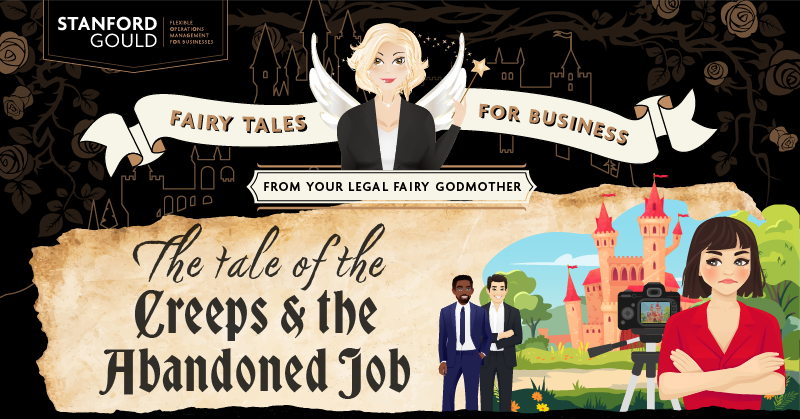
It was a typical Royal wedding on the lawn of the palace and the sun was beating down. The King and Queen had pulled out all the stops for their darling Prince’s wedding – the Pimms was flowing, the canapes had long since been demolished and the ice sculpture of a giant Corgi was melting by the second. Yes – the party was in full flow. Daisy, the Royal videographer, had been happily capturing footage all day (reportage style, as requested).

As twilight fell, the guests began to really let their hair down and the bar stocks started to deplete. The bartenders were filling up the champagne fountains as quickly as the guests were guzzling the contents. Consequently there was a small group of chaps, led by the Lord Lieutenant’s nephew three times removed, who were totally bloody blotto. When Daisy walked past to fetch a different tripod from her car, she was met with a barrage of inappropriate comments from them in the plummiest of accents, and let’s just say it was nothing to do with her videography prowess.

That was bad enough, but on the second trip to the car to change into her flats, another of the loutish Z list Royals squared up to her, and offered his ‘services’. Imagine the boldness!  He was so drunk that any attempt to make acquaintance with his crown jewels would have been a terrible let down, for sure…… NOT the attractive proposition he clearly thought he had made.

Furious, she brushed him off with disdain and continued with her work. Lo and behold, an hour or so later the group found her again – this time as she was having a short break at the bar, chugging back a cold soda and lime. This time one of them stepped well and truly over the line and grabbed her, leaned in with his hot, boozy breath and whispered something unspeakable into her ear. That did it – Daisy knew it was time to leave. She extracted herself from the group, reported the matter to the castle security and was promptly escorted safely back to her car by the venue staff and departed the palace.

A few days later, when the King and Queen queried why there was limited video footage of the evening reception, Daisy referred them to her complaint, logged and time-stamped by security. She explained that she had felt extremely threatened by the male guests in question and had worried for her safety.

It seems the Royals were not sympathetic to the situation, for they were less than happy and demanded a refund on the videography fees for the entire day! Daisy was aghast and disappointed that she needed to explain herself to the King and Queen but she politely yet assertively informed them that the anti-social behaviour clause in the videography contract stipulated that in the case of abuse or harassment, she was within her rights to extract herself and leave without refunding any fees.

It was a shame that relations had become strained with her Royal clients, but thanks to her Legal Fairy Godmother, Daisy was on firm contractual ground and after a few days the King and Queen must have realised this too, since they sent her a huge bouquet of roses from the Royal garden and a lifetime’s supply of Pimms by way of apology. Every cloud…

Want to know what can happen if you don’t have this clause in your contract and you find yourself the victim of harassment or antisocial behaviour? Find out here.

Why are client contracts (or your Terms and Conditions) so important?

Many businesses operate without proper contracts in place and this can be risky for many reasons. Usually folk ‘beg borrow or steal’ something to get going, but you have no idea whether what you have acquired is any good in the first place, or if it suits your needs and requirements. You need to protect yourself and your business, and set out clear expectations from the outset for the benefit of all parties. Here are my top 3 reasons for why client contracts are so important. 

1. Define your services or goods properly

What’s included, what’s not. What bang are they getting for their buck? What are the extras?

Do you change for travel, mileage, other expenses like meals or drinks (often called subsistence).

Is VAT applicable (watch the rules if you are not registered for VAT and check with your accountant about what you can claim back, or pass to your customer).

Do you add delivery charges, handing fees, postage?

This is about being clear about WHAT you are providing, WHEN you are providing it and to some extent HOW you are providing the goods or services. Be careful not to get too hung up in the details and then end up with a set of T’s and C’s running to several pages of logistics and expectations. It’s always a balance between clarity and trying to deal with likely outcomes ahead of them arising, with being sensible and having a document that you understand and actually works for both of you.

why are client contracts so important anyway

2. Be explicit about deposits and cancellations

The second reason client contracts are so important. This is one of the most problematic areas if your client contract is silent on this issue. Define the deposit or booking fee and why you might make it non-refundable – for example because it secures the date of your delivery, and what it covers otherwise. What happens if you cancel? What happens if the customer changes their mind? These two things are different and should have different consequences. Be clear.

Whatever cancellation provisions you have, they need to be tied into your payment schedule or time line. Do not find yourself in a position where your client cancels and you still need to extract some payment from them as a cancellation fee or penalty …you will soon know the meaning of the expression ‘blood from the proverbial stone….’

3. Limiting your liability

Yes you can, but do not attempt a blanket clause that makes you responsible for nothing, ever, anywhere…. There are statutory provisions and case law that make such clauses ‘unfair’ and thus unenforceable. You cannot limit your liability for causing death or serious injury – that’s in part why public liability insurance exists – but you may be able to limit your exposure for causing loss when you ‘cock it up’. This is obviously not a legal expression, but it means you can limit your liability when you are in breach of contract or negligent. Take advice about this. You can also legally exclude your responsibility for some specific types of loss – like loss of profits. Make sure you understand your exposure and have appropriate insurance cover to protect you.

So, there you have it, 3 reasons why client contracts are so important! Need help? You can find our contract templates below, and lots of free info on our blog.

Wedding Deposit Refund Requests – Are Covid Contracts Cancelled?

As wedding suppliers over the last 18 months, I’m sure the topic of a wedding deposit refund has come up more than once. We all know that Covid has come with a mountain of new and unique challenges for the wedding industry, the effects of which are still ongoing. As of yet, the courts have had limited cases concerning Covid for us to draw advice from.

There has, however, been a change in the water for videographers following the decision of the case ‘Spicer and another v Britton T/A Limelight Films (unreported), 16 April 2021‘. The court held that the videographer was not required to provide a wedding deposit refund after providing the client with alternative dates to re-schedule the wedding.

A few months on, we look at the practical impact of this for videographers and what it means for you now!

videographers wedding deposit refund requests

Summary of The Wedding Deposit Refund Case:

  • Firstly, the CMA (Competition and Markets Authority) released official guidance that most contracts would be ‘frustrated’ by Covid, therefore requiring deposits to be refunded – I’m sure you’ve heard all about this!
  • The Spicer case in question concerned a contract to film a wedding that was postponed due to Covid
  • In trying to agree on a new date, the clients proposed one the videographer couldn’t make (sounding familiar!?)
  • The videographer offered another date with an alternative videographer, however the clients refused this on the basis that it was an alternative
  • The clients attempted to claim their wedding deposit refund (20%), relying on the guidance released by the CMA
  • The videographer refused the refund, and the case went to court…
  • In court, it was held that the contract was NOT, in fact, frustrated, and the deposit was not refunded!

This may seem unusual as it goes against CMA guidance, however the judge gave his own reasoning based upon 1) the express terms of the CONTRACT, 2) the significance of the date in the CONTRACT and 3) the clients having the option to reschedule.

If you want to read more about the case, check out this link explaining it in more detail:

So, what should you do when you find yourself in similar situations?

Firstly, deposits…

The judge ruled in favour of a non-frustrated contact, meaning the deposit did not have to be refunded. As a videographer you want the security of knowing you will not be forced to refund deposits. As mentioned, the express terms played a large part in the judge’s decision – which is why having a contract is SO important!

The express terms as written in the contracts provided here at Stanford Gould could protect you from refunding client deposits, similar to Spicer. The judge placed a large significance on the idea of reading all the terms in cohesion, therefore it’s important to have a comprehensive contract should this situation arise.

county court claims wedding videographer

Bossy or stubborn clients…

The Spicer case gives us an insight into the world of pushy clients…we all know and have some!

In this case the clients were provided with an alternative date and videographer, but refused. It was the fact that the clients were given a choice that allowed the judge to find their contract to no longer be frustrated. A choice to ameliorate or resolve the issue of a contract cancelled or postponed by Covid can lead to no requirement for a wedding deposit refund.

Ability to reschedule…

Another example of the importance of having a contract! In Spicer, the judge looked at the significance of the date within the contract to see if rescheduling the wedding would allow the contract to continue.

As a videographer (or any contractor providing wedding services) it is important to know if you will be required to reschedule all the weddings postponed by Covid. It was held by the judge that even though the clients offered a reasonable alternate date, the videographer did not impact the contract by refusing that date because they offered another.

Lastly, being taken to court…

It may seem like a series of events that could never happen to you, especially over a wedding deposit refund, however you may find yourself being threatened with a county court claim by a client!

This is why it’s so important to have a written contract that can be depended upon should the case be taken to court. It may seem scary, but the written element of your agreement provides all the information about your obligations and protections.

All Stanford Gould contract templates are written to try and provide this protection in these situations – you’ll find them all HERE. If you aren’t confident in your contract, purchase one quickly and easily through the link provided!

CMA Guidance & Client Refunds; A Videographers’ Case Study

Videographers, just like all wedding suppliers, have had their fair share of challenges from customers demanding refunds pursuant to the CMA guidance. If that sounds like you, this blog is definitely worth the read!

We are finally starting to see the Courts catch up on the back-log of claims for refunds issued last year, and here’s a really interesting case for you guys that might prompt you to a contract overhaul. Read on to find out whether your contract would stand up if this were you!

videographer contracts

It’s a County Court case called Spicer v Limelight Films. You can check for a fuller summary of the case and its facts here (see Pinned Post at the top of our Facebook page via the link) and here (further info from another source), but suffice to say the customers wanted their money back after their wedding was postponed due to Covid. As a county court case, it isn’t binding on a judge elsewhere, but it’s what lawyers call ‘persuasive’ – that means it’s important to bring this to the customer’s attention pre-action, and the Judge’s attention in any current claim, as it can ‘persuade’ the judge this is the route to follow. 

In other words – it’s super helpful!

Three issues arose that you should now make sure your contract covers:

1 The Judge interestingly dealt with the idea of self-induced frustration of the contract by the couple. The videographer had offered a number of alternatives to the couple who had refused all such offers. The couple booked a date that suited all other suppliers except the videographer. The Judge maintained this was a choice made by the couple and therefore could lead to the conclusion that they had ‘self-induced the frustration’ (the inability to deliver) of the contract.

This point is super relevant if you are any wedding supplier embroiled in that argument about date changes by your couple to dates you cannot do….

wedding date change

2 In this case, the contract provided for postponements and changes in the date of delivery and also set out what was to happen in such circumstances. That was something the Judge considered to be key – the parties had agreed in writing what the outcome was to be. 

I keep banging on about how important written terms and conditions are – here you go: evidence.

Your written contract should include what happens to the money paid if someone cancels – and what happens to the money if the contract is affected by events out of your control. The Judge also endorsed the idea that a separate booking form, setting out the date of the wedding and the other bespoke details of the delivery of your services, was better than having the date of the wedding in the contract itself. It suggested that a change of date was contemplated.

3 This videography contract had a term which was clear that in such an event, the videographer would incur loss and the contract set out how those losses were to be partially covered. The Judge ruled that such a clause expressly provided for the scenario that the couple and the videographer had found themselves in.

videographer contract

All our templates incorporate such a clause.

Notice how in each issue outlined, the contracts in place served their purpose! Do your terms cover these issues? Ours do – find our videographers template here available to buy and download now.