
3 Freelancing Tips; Things To Know As A ‘Newbie’

Hi, let me introduce myself. My name is Giselle (that’s me on the left in the image below!) and I am working as a freelancer at Stanford Gould. I have been a freelancer for four months now, and I want to share my three biggest freelancing tips, the things that I have learnt in that time, and the mistakes I’ve made – so you don’t have to! 

Image by Megan Wilson

Tip one – Planning ahead

I work as a freelancer part-time along with my university studies so one of the biggest things I have learnt is how to effectively time manage – that means a lot of planning ahead! 

One of the obvious benefits of freelancing is the flexibility and freedom in how and when we work since there is no rigid 9-5 office structure; you are essentially your own boss.

However, freelance work still requires high standards of work to be produced, usually to tight deadlines. This is normally a juggling act of balancing various tasks, projects, and assignments which can be a pressurised situation, leading to a LOT of stress. 

So, it is essential to be able to balance our work and this requires some planning ahead. 

What is my method and the first of my freelancing tips?

I really like to have my weeks planned out beforehand. I rely heavily upon my diary for planning the upcoming months. (I use an app called Notion that I would really recommend having a look at.)

Planning for me does not only include separating the tasks but also prioritising and, most importantly, awarding enough time to complete the tasks well. This can sometimes be missed since we are busy packing the work into our weekly schedules, however being realistic about our own abilities is a skill that is essential to time management. 

There is no point planning to do 30 hours of work in 10 hours if you physically cannot produce the work to that rate. I learnt this from a few past mistakes, and it did not end well (oops – lesson learnt!).

The ability to realise your own work rate and potential is key to creating realistic and achievable plans to allow you to complete your work effectively. It can also help take off some of the stress in the working week. 

Tip two – Finding motivation!

The pandemic has shifted everybody into a new state of working including WFH, or working from home, as the new normal. 

As freelancers it is often easy to find working from home a benefit to create flexible working, however there is also a particular ease to getting distracted or losing motivation as you’re sitting at your desk in your room. 

So, what motivates you? Working this out is key to the second of my freelancing tips! 

Personally as a university student I know there is always the tendency to order lots of takeaways and go out too much, ignoring the work I have to do. However, this pandemic has been a wake-up call on how to self-motivate and how to keep that motivation over a prolonged period of time. 

We all know it is easy to give ourselves a pep talk to motivate us to complete the final hour of the project before a deadline, however how do you keep that motivation for longer than just that day?

It is true there will always be ‘off days’ but working on motivating yourself for most of your working time is essential to being a successful freelancer. 

So, what’s my method? 

There are various ways to keep motivated, however here are some that have worked for me. These are not drastic changes or routines to stick to, but easy little changes that help motivation. 

These include:

  • Creating your own structure – a structured routine that sets boundaries for when you are going to work prevents you being mentally exhausted or burnt out. 
  • Being healthy – sounds simple but this improves brain function and the ability to focus by eating well, exercising and getting enough sleep. 
  • Allowing time for breaks – this can be short 20 minute breaks or a break to go on holiday. Both are just as effective in sustaining motivation long-term. 
  • Adopting a good work / life balance – the beauty in not working all the time and taking a little bit of time to do something different is so useful to keep a work / life balance. 

Obviously, all these ideas work differently for different people and there is no winning solution, however little changes can help improve our motivation and focus in the long term. This is one of the things I have learnt and would definitely suggest giving it a go!

Tip three – Learning to enjoy the job

Image by Megan Wilson

As freelancers we are our own bosses, and this usually means we have chosen the path in which we want to produce freelance work – so let’s embrace that. This is the last of my freelancing tips!

Yes, there may be bad days or boring projects that you would love to never see again, however you are working in an area that you love or that you are passionate about. This is a sense of fulfilment that many people strive to have in their careers. 

Freelancing may be a difficult job, however one of the perks is definitely the control and freedom of working for yourself, and how you make your job enjoyable is part of that. This is one of the biggest things I’ve learnt in my journey as a freelancer so far – to enjoy and appreciate the job. 

I hope this shed some light on the work of a freelancer and some of the things I have learnt. 

P.S next 14th May you can celebrate national freelancer day! 

If you’re a freelancer looking for a contract template, you can find those HERE.

CMA Guidance & Client Refunds; A Videographers’ Case Study

Videographers, just like all wedding suppliers, have had their fair share of challenges from customers demanding refunds pursuant to the CMA guidance. If that sounds like you, this blog is definitely worth the read!

We are finally starting to see the Courts catch up on the back-log of claims for refunds issued last year, and here’s a really interesting case for you guys that might prompt you to a contract overhaul. Read on to find out whether your contract would stand up if this were you!

videographer contracts

It’s a County Court case called Spicer v Limelight Films. You can check for a fuller summary of the case and its facts here (see Pinned Post at the top of our Facebook page via the link) and here (further info from another source), but suffice to say the customers wanted their money back after their wedding was postponed due to Covid. As a county court case, it isn’t binding on a judge elsewhere, but it’s what lawyers call ‘persuasive’ – that means it’s important to bring this to the customer’s attention pre-action, and the Judge’s attention in any current claim, as it can ‘persuade’ the judge this is the route to follow. 

In other words – it’s super helpful!

Three issues arose that you should now make sure your contract covers:

1 The Judge interestingly dealt with the idea of self-induced frustration of the contract by the couple. The videographer had offered a number of alternatives to the couple who had refused all such offers. The couple booked a date that suited all other suppliers except the videographer. The Judge maintained this was a choice made by the couple and therefore could lead to the conclusion that they had ‘self-induced the frustration’ (the inability to deliver) of the contract.

This point is super relevant if you are any wedding supplier embroiled in that argument about date changes by your couple to dates you cannot do….

wedding date change

2 In this case, the contract provided for postponements and changes in the date of delivery and also set out what was to happen in such circumstances. That was something the Judge considered to be key – the parties had agreed in writing what the outcome was to be. 

I keep banging on about how important written terms and conditions are – here you go: evidence.

Your written contract should include what happens to the money paid if someone cancels – and what happens to the money if the contract is affected by events out of your control. The Judge also endorsed the idea that a separate booking form, setting out the date of the wedding and the other bespoke details of the delivery of your services, was better than having the date of the wedding in the contract itself. It suggested that a change of date was contemplated.

3 This videography contract had a term which was clear that in such an event, the videographer would incur loss and the contract set out how those losses were to be partially covered. The Judge ruled that such a clause expressly provided for the scenario that the couple and the videographer had found themselves in.

videographer contract

All our templates incorporate such a clause.

Notice how in each issue outlined, the contracts in place served their purpose! Do your terms cover these issues? Ours do – find our videographers template here available to buy and download now.

Legal Jargon Busting: Your Stanford Gould Online Template

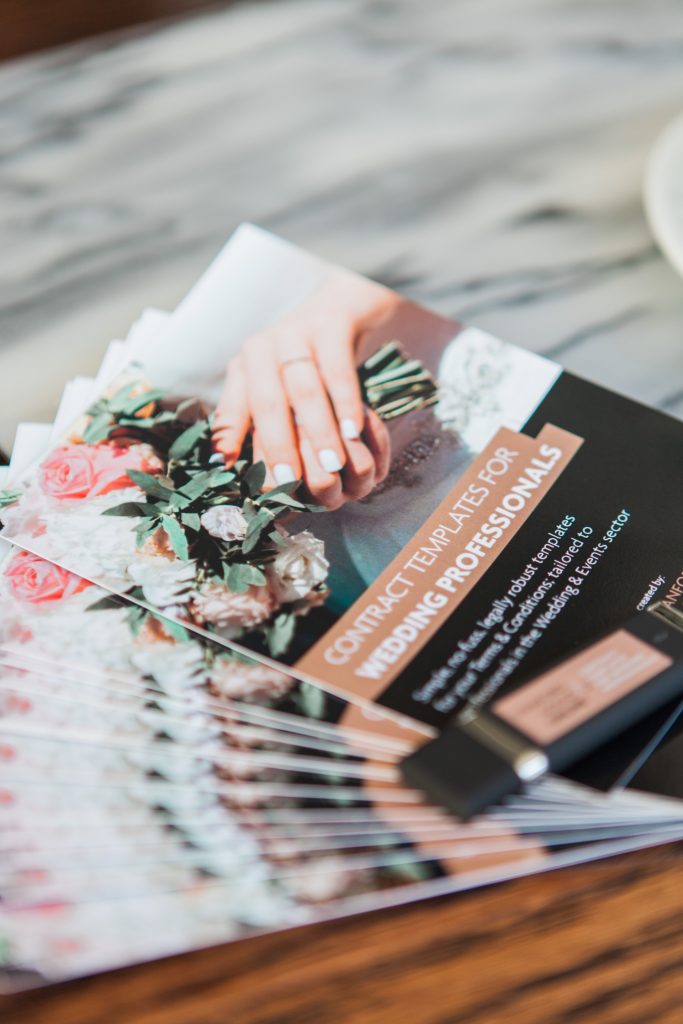
Our brand new, totally free legal jargon busting document is available as a download from our website, Stanford Gould Online. It’s designed for use alongside our fuss-free, legally robust contract templates for wedding professionals, to enable you to set out your Terms & Conditions to your customers. This is also a super useful free tool for any of our existing customers who have already downloaded and are using our templates in their business.

Our template checking service is available to amend clauses and check the template, however it doesn’t include general advice about the meaning of clauses. This legal jargon busting download unpacks as much as possible so you can understand and explain your contract to your customer or client.

legal jargon busting

Making complex legal terms within contracts more simple is what we do – our testimonials frequently attest to that; after all, Stanford Gould’s Heather is known as the Legal Fairy Godmother to the Wedding Industry!

“Heather completely understood my requirements from the very get go and the clear, logical and thorough advice and support she has provided to both me and my business has thankfully been both jargon free and invaluable.” – Katrina Otter, Katrina Otter Weddings

jargon busting guide

Examples of the frequently asked questions included in the document are…

‘Why is everything capitalised in the definitions section?’

‘Can I change the word deposit to something else?’

and 

‘Would you recommend a Covid-19 specific clause?’

Since you’re here, we’ll give you one jargon busting tip now and you can find the rest by following the instructions at the bottom to grab your free guide.

legal jargon explained

So why IS everything capitalised in the Definitions section?

Put simply, it’s a legal convention that when you define something in a contract (for example Client or Event fees) and add speech marks “…” around it, that definition then applies throughout the document wherever that word appears.

This means if you refer to the Client, you mean the one specifically defined in the contract. If you refer to the client (no capital) that could be anyone. 

TIP: if you add or amend anything in your template, make sure to use capital letters for anything defined in the first section throughout the rest of the document.

Find your specific contract template for your business type HERE – we’ve got some brand new ones as of April 2021 to cover even more wedding business types! Then find your free jargon busting document HERE to use alongside it, and wow your customers with your professional and knowledgeable set up.

Team SG: New Arrivals for April 2021!

Team Stanford Gould (Team SG) is back from an Easter break, and we’ve been working hard behind the scenes to bring you a whole host of newness for April 2021! Today we introduce Team SG’s newest member, and give you a clue as to what we’ve been beavering away on all this time – we know we’ve been dropping hints and keeping you waiting, but all is now revealed.

New Team Member

Meet Giselle – Team SG’s newest member! Giselle is studying for her degree at Nottingham Trent University – she’s in her second year of studying law, and loves it. She’s really interested in human rights and international law at the moment, and you can find her on LinkedIn here. We’re thrilled to be expanding the team and you can expect to see Giselle appearing here and there on our socials. She is mainly helping Heather by preparing the first drafts of requested bespoke contracts for our clients at the moment, helping with the new templates for SGOL, and generally learning the ropes on Team SG.

Giselle Tavener - new Team SG member

‘I can’t wait to see how much I learn from SG and I am really excited to be working with such an amazing team!’

Website Newcomers

The astute among you may have noticed that our Stanford Gould Online website has been down for a few days – that’s because Giselle isn’t the only new arrival around here. Team SG has been working hard to expand the range of contract and other templates on offer, and we’ve come through for you with 9 new templates! Now live on the website we are offering easy-to-use, no-fuss contract templates you can purchase and adapt for your business. We’ve added the following contract templates, and you can expect to hear about them in more detail soon.

•             Videographers

•             Solo musicians

•             Sweet trolley hire

•             Band/musical act

•             Photobooth hire

•             Entertainer/magician 

wedding supplier contract templates

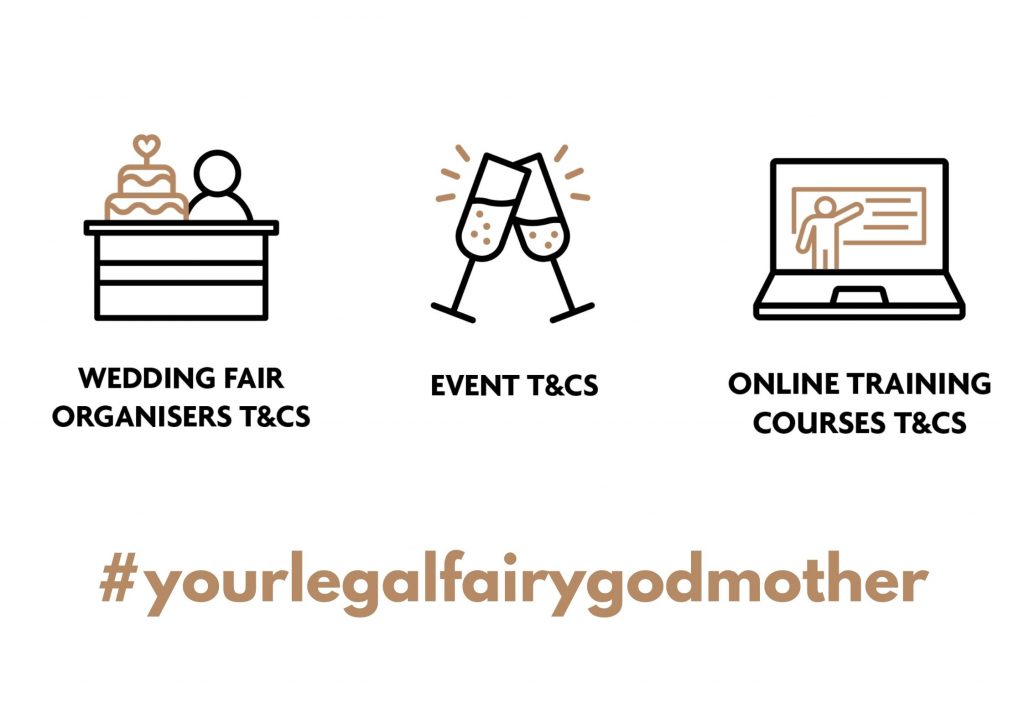
Together with Other Templates (just click on the home page menu tab) for

  • Wedding Fair T and Cs
  • Online training courses T and Cs, 
  • Event T and Cs 
other templates Stanford Gould

We’re really spoiling you, we know. But that’s not all! 

Helpful Resources

A much requested resource to go alongside our contract templates has been developed for you – you can now download our Jargon Busting Guide completely FREE from the website – click this link to get your download! ‘But Team SG,’ I hear you cry, ‘I thought your templates were fuss-free!?’. 

You know that we always try to make the complex as simple as possible, but some terminology and phrasing has to be used as a legal standard. We’ve created this Guide to help you navigate the template clauses and to explain them and their purpose as clearly as we can. 

Did we mention it’s free?

2021 Charity Partnership

Just before we go (we know you’re already reeling from all this fabulous new stuff), you’ll also find details on our website HERE about our new charity partnership for 2021, something that we’re very pleased and proud to be part of. There’s lots yet to come about this initiative, and how we hope to support FareShare (via Work For Good) this year.

We’re delighted to be back and we’re ready to hit the ground running, casting some legal magic over your wedding businesses. We hope you love all our new arrivals!

Team SG x

Your Legal Fairy Godmother; The Wedding Pro Cast

This week Your Legal Fairy Godmother headed to the Society of Professional Wedding Vendors, and I talked all things wedding industry contracts with Donna. You can listen to The Wedding Pro Cast episode on all good podcast platforms, and whether you already have a contract in place or not (especially if not!), it’s full of helpful tidbits and advice!

#YourLegalFairyGodmother

In the podcast I talk about how my widely used hashtag ‘Your Legal Fairy Godmother’ came about to help bridge the gap between the creative wedding industry and the more formal law world. I recognise that they’re not sexy, fun or an exciting part of running a business, but coming from a dispute resolution law background I know how vital they are. Stanford Gould Ltd was born out of a desire to help small businesses get the important contractual ‘stuff’ in place in an accessible way – and eventually Stanford Gould Online was created to dial in on the wedding industry niche I’d begun to see opening up. 

your legal fairy godmother

Biggest Mistakes

I briefly talked to Donna about the three biggest contract mistakes I see people make, and these can be within wedding industry contracts or from any other small business. The first is user-friendliness! People make the mistake of thinking that just because it’s full of ‘legal jargon’ it must be a good contract, but in a nutshell if neither you nor your customers and clients understand it, it’s no good to either of you!

Secondly, people often make amendments and additions to their contracts as time goes on and problem scenarios crop up. However, this can lead to conflicting clauses in different parts of the contract which can in turn land you in hot water! I develop on this point and give examples in the podcast episode. 

The third mistake I so often see in wedding industry contracts is missing liability clauses. Particularly as a sole trader, it’s your assets (car, house, pension…) on the line if you have to pay up. Limiting your liability and protecting this is a MAJOR reason to have a properly created contract!

Your Legal Fairy Godmother’s 3 Top Tips for Contracts

Donna also asked about my three top tips for contracts for your business. Number one on the list in bold, underlined and with gold fairy dust all over it is simply this – HAVE ONE, and have it in writing! Your clients will think more highly of you if you produce one at the right time and get them to sign it, particularly in a world altered by the pandemic. 

My second tip is to make it understandable – make sure you know what it all means, and your clients do too. This is one thing we pride ourselves on with our wedding industry contract templates – they have the necessary legal terminologies but without being unfriendly and hostile to read. 

My third tip is very simple – USE your contract. Don’t set yourself up for a fall by not producing your contract on every single sale or booking. 

Do I Need An Update?

On the episode we also discussed times when you might need to update, revisit or change your contract. First and foremost, if you don’t yet have one in place then make it your next priority. Consider spending less on things to drive more sales and make sure your contractual responsibilities are met – starting with a contract template is the easiest and most affordable way to do this. 

If you haven’t had your contract reviewed since the pandemic begun, now is probably a good time to revisit it and make some amendments. I recommend annually or bi-annually reviewing your contracts.

Other reasons to change your current contract include changes or additions to your services (particularly if you’ve expanded into training – see THIS BLOG for more on that), increases in your prices or changes in the way they are paid, or if your insurance broker changes your cover. 

your legal fairy godmother

To see our options for wedding industry contract templates, CLICK HERE – if you’re reading this before 12th April 2021 then lucky you as our prices will be increasing! Grab your contract now to lock in the current price. If you don’t see one that fits what you do exactly, don’t hesitate to send us a message on Instagram (@stanfordgouldgroup) or Facebook (Stanford Gould Limited) – we will be introducing a set of new contracts within the coming months, so we can advise on whether we’ll have one for you in the near future!

With thanks again to Donna at the Society of Professional Wedding Vendors.

Your Legal Fairy Godmother

Terms and Conditions for Online Courses – Considerations

If 2020 taught us anything, it’s that the Wedding Industry is nothing if not a resilient community. Anyone else heartily fed up of the word ‘Pivot’!? In any case, last year wedding suppliers found themselves without weddings to supply…but the camera shutters weren’t silenced, the flower stems did not remain un-trimmed, the cocktail shakers couldn’t be stopped from mixing. Training and coaching services have experienced a boom!

Wedding suppliers from a variety of fields and backgrounds took their creative talents and adapted them, into brand new services in many cases. If you are one such supplier you may have chosen to begin sharing the skills you base your business around, launching training videos, coaching courses and teaching programmes. For skills-based suppliers such as photographers and florists, this may be part of your ongoing business plan for the remainder of 2021 and beyond. If your intentions are to exchange your knowledge for your fellow industry suppliers’ money, there are a few contractual considerations you’ll need to be aware of first. Here are our tips surrounding terms and conditions for online courses.

image shows a wooden table with some green and white foliage spread out on the left, a pair of scissors in the upper right, and a small a5 card with a drawing of a flower on in the centre

Things to Consider:

If you’re launching, or indeed have launched, some form of a training session or course for industry folk and/or couples, many hours of time, careful planning and expert content creation will surely have been put into these endeavours. These are, effectively, new services. Think back now to when you created the services you currently offer; you decided on an offering, what was included and what wasn’t, and you set a price. Your clients began to book in a steady stream, distributed evenly across the year (we can dream, right!?)…when they booked, you sent them a copy of your Terms & Conditions to sign and away you went!

The point is, your new offering needs to undergo the same process. If you currently do not have Terms & Conditions for online courses, or your current contract doesn’t reflect some of the nuances of your new service, you need to review this. If you’re seeking help with writing Ts&Cs that accurately reflect your offering and process, follow THIS LINK for easy-to-use contract templates specifically for Coaching & Training – these are not the same as your day-to-day contracts!

You also need to check that you are insured to provide these new services – don’t assume that they are automatically covered under your existing business insurance policy. Tell your broker about changes to the way you work or deliver and then you can ensure that they are included, often for no more premium. But if you fail to inform the insurer of such changes, this gives rise to the real risk of the WHOLE insurance cover being refused in the event of claim, whether as a result of the use of your existing or these new services. Be careful!

the image shows a laptop from above with hands typing on it. brown sleeves are visible.

Terms & Conditions for Online Courses:

Robust terms and conditions for delivering online training to your customers should include several key clauses, but these may have significant differences to your existing Terms of Business. Are you now supplying Business to Business? That makes a very big difference to what you can and can’t have in your contract.  The Stanford Gould template offering covers the following items, and more…for example, do you take payment in full from your trainee before course commencement? Or do you agree payment in stages? Your contract should deal with this. It should mention your right to suspend your services in the eventuality that you aren’t paid, and your GDPR obligations (yes, that’s still a thing – see HERE for practical tips on this!). It should also limit your liability and make the jurisdiction for any dispute. If these sound like things your current contract does not include, it’s time to look again at your Terms & Conditions before soldiering on with your 2021 training plans.

In summary, if you’re a supplier looking to expand into training and coaching you need to make sure your business is set up legally robustly to deal with this. If 2020 was the year of the Pivot, don’t make 2021 the year that your Terms & Conditions land you in hot water; we’ve had enough of that already! We hope the tips in this blog helped, or at the least reminded you to pop this on the to-do list. 

With all the knowledge-sharing going round, this time next year the Wedding Industry will be overflowing with talent!

Main image by Amanda Karen Photography. With thanks to Megan Wilson for final image.

Wedding Business Owners; ‘5 Wonders of Wedmin’

Hello wedding business owners! Katherine here, otherwise known as The Wedding Industry PA, and as a virtual assistant to the wedding industry it’s basically my job to work miracles with time…it’s our most precious non-renewable resource, and in the world of weddings we don’t have much of it in surplus.

Day-to-day I help ambitious wedding business owners focus their energy on their clients and aspirations by taking on their outsourcing, with tasks ranging from social media content creation to venue and supplier searches for weddings. Today, I want to share a few of my VA secrets with you; I’ve got 5 of my favourite tools and programmes that will help you automate and streamline your business, saving you time in the long run! Let’s get started, shall we?

A woman in a brown jumper reclines on a bed working on a laptop, surrounded by notebooks. Wedding business owner tips for automation

Canva Pro

First on the list is one I’m sure we as wedding business owners all know and love, Canva! I use Canva in my VA business for a huge variety of things. When a new client enquires with me I send them a brochure detailing my services, and then follow up our consultation call with a bespoke proposal. After booking they receive an agreement to sign, and their first invoice. All of these are created in Canva. I use it tonnes for client work too, often collaborating on their designs. The free version is great, but I’m specifically recommending the ‘Pro’ version (£10.99 per month) for the following reasons…

  • you can create and store templates for your documents, meaning you can just insert the necessary information into each individual proposal, invoice etc and don’t have to start from scratch each time
  • you have the ability to create your ‘brand kit’ – this stores your brand colours and fonts, and makes them readily available to use in your designs 
  • you can also create ‘teams’ in Canva pro, so if you’re more than a one-person band everyone can access the same designs and tweak them (this is how I work in my clients’ Canva documents!)
  • finally, I love Canva pro because you can download images with a transparent background – so useful for overlaying text or logos into other places!

Visit Canva.

HelloSign

There are many different iterations of this programme, but I use HelloSign for sending out agreements to my clients – these contain payment schedules and, once signed, are taken as written acceptance of the terms and conditions sent to them. It suits me fine and its perks include…

  • intuitive, easy-to-use functionality 
  • the free version does everything I need it to, though you can upgrade for more features!
  • it solves the problem of trying to create fillable fields in your PDF documents, or Windows users not being able to open Pages documents and vice versa!

Try HelloSign.

Tailwind

I’m going off the beaten path slightly with this one! Tailwind is a scheduling tool for Instagram and Pinterest, and many business owners might be wondering why I chose this one instead of a more commonly known tool such as Planoly or Later. When I first started using Tailwind it took a little bit of getting to grips with, but basically it is intuitive to use and has some great features its competitors lack, particularly when it comes to Pinterest…

  • it gives you the option to create, which I love for creating client Pinterest graphics
  • the programme pulls photos and text straight from your website URL and really takes some of the hard work out of graphic creation
  • unlike Planoly or Later, Tailwind keeps all your content creation and scheduling in one place which is perfect if you like things compact!

Take a look at Tailwind.

A woman in a brown jumper sits working on a laptop in front of a window. Wedding business owner tips for automation.

Trello

Trello is my go-to tool to manage all my clients’ tasks in one place. It allows you to create separate ‘lists’ with to-do tasks underneath, and you can label them up and tick them off accordingly as you go. My favourite things about Trello are…

  • ability to collaborate on ‘boards’ with other Trello users; I collaborate on lots of my clients’ boards so we can both keep an eye on our progress, and leave reminders for each other
  • it’s aesthetically pleasing! You can change the backgrounds and colours on your boards and make it look pretty – unimportant, but satisfying 
  • it stops a chronic list-maker like me from having endless pieces of paper wafting around my desk; I’ve probably saved a small forest at this point

Visit Trello.

Yoast

If you’re not familiar with Yoast, it means one of two things; you’re not a WordPress user or you’re blog-phobic…not that I’d blame you for either of those things! Yoast is a plugin you can set up on your WordPress website that essentially SEO-optimises your blog posts for you before you publish them. Enter your blog text and tell Yoast which keyword phrase you’re trying to get noticed by you-know-whoogle, and it will tell you where to make changes and improvements to increase your changes. It’s great because…

  • it makes suggestions for small, easy alterations that don’t feel overwhelming
  • you don’t need lots of technical or SEO knowledge to be able to use it
  • you get a lovely green smiley face when you’ve done it properly…again, unimportant but satisfying!

Contract Templates

The astute wedding business owners among you may have noticed that although I said I was sharing my top 5 tools and programmes, I have in fact slipped a 6th in here…aside from the fact that Heather is allowing me this platform to share this with you, I felt it was important to mention contract templates as a great streamlining and time saving option for your business. When I set up my Wedding Industry PA business I bought Stanford Gould Online’s Virtual Assistant Contract Template – it was instantly available for me to use, I customised it with my logo and then simply went through and changed the relevant words…it could not have been easier.

If you’ve ever tried to sit down and write your Ts & Cs you’ll know that, without specific legal knowledge, it’s nearly impossible! I really recommend saving yourself time, stress and potential bumps further down the road by purchasing a professional contract template. Just saying, you can find them HERE…

I provide tips, tricks, tools and advice on a regular basis over on my social media platforms (IG: @theweddingindustry_pa), so for more like this and tonnes of other wedding industry business owner content, feel free to head on over there and say hello (or, you know, contest my list if you like!).

Until the next time, happy time-saving,

Katherine x

Images by Megan Wilson

Practical GDPR for the Wedding Industry; 2021 Compliance

Since GDPR Compliance first came into force on 25th May 2018, businesses could either have become really good at storing and protecting data, or it could have dropped off their radar…out of sight, out of mind! Whether your business falls into the former or the latter category, today’s blog is full of practical GDPR tips to keep you on track.

This blog comes courtesy of Katherine, The Wedding Industry PA (hello, that’s me!). As a virtual assistant to the wedding industry, it’s vital that I’m compliant with the GDPR regulations as I regularly receive, and have a need to store, client data and information. I’m going to tell you today about some of the considerations I (and you) have to make in order to be GDPR compliant, with real-world examples of how this can be achieved. Failing to comply with GDPR guidelines can land you a hefty fine, so read on to ensure you’re ticking all those boxes!

practical gdpr compliance

Types of data

Firstly, you may be thinking that this doesn’t really apply to your business because you don’t collect confidential information. But, let me ask you this – do you have your clients’ names and email addresses stored electronically (In your phone? Your laptop?) or written down somewhere, either in paper or digital format? How about addresses? If so, you will need to consider what information you hold, and how you store it. 

As a VA I hold much of my information digitally, but I also have to be aware of the fact that when I do initial client consultations I scribble lots of things down in a notebook. The first practical GDPR compliance tip is to be aware of what information is where, so making lists and grouping it can be really helpful. Using a spreadsheet, or paper if you’re not au fait with the wonders of Excel, sift through your files and notebooks and list the type of data in one column (i.e. ‘name’, ‘contact number’ etc), and where it is stored in the next (i.e. ‘notepad’, ‘spreadsheet’, ‘sticky note’). 

Methods of storage

Digitally-held information makes up the vast majority of my data as a virtual assistant – I have an affinity for great spreadsheets, and work with electronic folders for each of my clients. If you have noted that any of your data is held on a laptop, desktop, iPad etc…then consider these steps I have taken to make this secure!

Password-protecting your laptop or device is a fantastic start; I recommend using different passwords for each, and changing them regularly. I also go one step further and password-protect documents and files containing sensitive data (defined in the GDPR as something that identifies a particular characteristic like disability, or sexual orientation), for example client databases holding venue access issues, or food requirements which might give rise to sensitive data about a person. Have a look at Heather’s blog on sausage rolls of all things…(https://www.stanfordgouldonline.co.uk/wedding-caterering-contract-advice/). I love Apple devices for this purpose, as only one simple step is needed to create a password for a document, and on newer devices it can then be unlocked using a fingerprint – this removes any inconvenience that might have been associated with this task!

practical gdpr compliance, digital storage

Paper files and ‘hard copies’ of data take a little more consideration. Think about your ‘office’ environment, even (especially) if that’s at home. Firstly, do a sweep of your papers and think about what information someone could access if they walked into your home uninvited…whilst it’s never nice to think about, getting a filing cabinet or box that can be locked, and storing your data in there overnight or when you go out can offer some peace of mind. Now do a second sweep – is there anything sitting there that you no longer need to keep? If so, shred it! 

In my role as a wedding industry VA, I retain clients’ information only as long as I’m working with them – when our contract comes to an end, I make sure to destroy or delete sensitive information relating to them or their business because I no longer have a need to store it! At night, and when I leave the house for extended periods of time, I have a lockable, waterproof safe to keep my laptop and notepads in. It seems extreme, but it doesn’t bear thinking about the consequences of it all going wrong!

practical gdpr compliance for hard copies

What if it does all go wrong?

I understand that sometimes, despite your best efforts, things can and do go wrong. Data breaches, hacks, lost information…it can happen. So what do you need to do if you leave your laptop on the train, or someone breaks in and makes off with your stack of notebooks? 

You have a duty to consider the impact on people whose data you hold – for example, can someone potentially access just a client name, or is their website login information vulnerable? You must report this to the ICO (Information Commissioner’s Office) within 72 hours of the mishap, and be prepared to show that you have taken reasonable steps to comply with the GDPR guidelines. What do I mean by this? Well, if you have left your laptop on a train but you’ve password-protected it and the sensitive documents within, chances are only a hacker with a special interest in your clients is going to get at it!

Where can I get some help with this?

If you’re feeling uncertain about whether you’re compliant, fear not, we’re here to help! Stanford Gould https://www.stanfordgould.co.uk/ and Stanford Gould Online https://www.stanfordgouldonline.co.uk/#
are specialists in contracts and templates for your business, and their GDPR Starter Pack (https://www.stanfordgould.co.uk/downloads/gdpr-templates/) is designed to give you a practical to-do list to get you compliant. It even contains templates for necessary documents, including your website Privacy Policy (yep, this is part of GDPR Compliance too!).

If you think you need a little more one-to-one guidance on this, Stanford Gould’s GDPR Review could be the answer (https://www.stanfordgould.co.uk/gdpr-review/). They can help you with GDPR assessment, website and email compliance, ICO registration requirements and also provide a review of your contract terms.

Click HERE to contact Heather and the team about a GDPR Review.

Take home message: Don’t let this go to the bottom of the to-do list! Whilst it can seem like overkill, implementing these practical GDPR Compliance tips into habits is a vital foundation for your business, and just might pay dividends someday. 

Signing out of my password-protected laptop,

Katherine x

All images by Megan Wilson

2020 Wrapped; A Look Back (And Forwards!)

That’s it; 2020 wrapped! The feed is full at this time of year with review tips, planning ideas and all forms of video and photo collage, relived memories, post reminders…with ‘Your Year Wrapped’. Most of us are keen to just draw a line under the last 12 months…

Here at Stanford Gould, we have been both blessed and a little cursed by 2020. We have hung in there with you all throughout, trying to be an oasis of support and help where we can. We have done long hours at the desk, on the phone, at the LIVE feed, and on social media groups and platforms to provide our usual services to customers old and new. Plus, we have been adding value to our FB group Your Legal Fairy Godmother and offering as much free advice and help as we can during what have been unprecedented times. We have met some fabulous wedding folk along the way; warm and passionate about their businesses and desperate to do the right thing, and the best thing, for them and their customers, where they can. You have been so creative and imaginative in finding solutions and opportunities, flexing and pivoting, as each week brought new challenges. And I want to say this, with 2020 wrapped up…

You have inspired me x

  • We have delivered over 20 live training sessions to wedding suppliers in groups and special interest communities about their legal and contractual obligations, delivered FB Live help, YouTube videos and answered your Q and As  – as of now, our video content has been viewed by over 40,000 folk (I still can’t really comprehend that……I’m told a few mad folk have binged watched me over weekends and that is funny!)
  • Our FB members-only group Your Legal Fairy Godmother topped 1000 members in the Autumn, and we are so grateful to all who have joined and who continue to contribute and support members within that group so well. Membership is now open again until end January ’21 and there continues to be no fee to join. Come on in?
  • Since September 2020, we have given away over £700 worth of free template upgrades to our existing customers, having upgraded and revamped our templates on Stanford Gould Online, as well as regularly offering new Covid-relevant templates to help with email responses and dispute resolution, signposting other services like mediation and, as we move into the next stage of this journey, helping to shape the roadmap back to normal (can we actually remember that?)

I strongly urge you all to tap into the Wedding Taskforce and sign up for the updates and feedback they provide. We need a cohesive response to this coming 12 months and, having now got the ear of government, we need to make sure we positively change how we are perceived by all inside and out of the wedding industry, for the better and for good.

I sincerely wish you all hope, love and happiness for the next 12 months.

Heather and Team SG x

Dispute Resolution Deal; Tis the Season

I’m here today with some tips for using this festive season to see if you can reach a dispute resolution deal, pre- or post- the issue of court proceedings. This will be handy for you if you are currently in dispute with a client over possible refunds or moneys owed.

dispute resolution deals this Christmas

If you were with us on the Facebook LIVE this morning, or if you have watched it on catch up or our YouTube channel, here’s our step by step guide to help you create some offer emails to your opponents.

Please watch the LIVE here first and use this blog to craft your correspondence. It needs to sound like YOU, not ME, and feel like a genuine attempt to reach a dispute resolution deal, so make it authentic.

My step by step suggested email format is this:

1              Set the scene – “we have been in correspondence with you regarding your wedding since…”

2             Set out what they have already paid, and what they are now requesting you to pay back.

3             Set out what, if anything, you have offered to date.

4              Quantify the financial difference between your two positions – the sum at stake.

5             Then state “We want to make a new offer to settle this claim. We do so because

  • we want to reach a settlement with you and move on
  • we want to concentrate on our family and our business at this time
  • we want to move into 2021 and look forward, not back

Note: you can use the Covid-19 email template that many of you purchased in the summer as a base – it’s still available here.

6             State the new offer

  • NOT why, or the reason, or justification, or the evidence.  JUST the offer.

7             Set out the time scale for acceptance and payment – make it as short as possible.

  • By return is ideal, within 7 days might be more practical. Request the bank details to make the payment or say you’ll send a cheque (if you still live in 1995 like I sometimes do…)

8              Use a version of the costs paragraph I talked about in this blog about Pre Action protocols

  • We have been advised about our obligations under the Pre-Action Protocols that apply to contract cases. If you do progress with a formal complaint or claim, we reserve the right to draw this correspondence to the Judge on the question of costs.

9              Finally, suggest that this is a seasonal gesture using words such as…

  • We hope this offer to settle is now seen as a genuine attempt to finalise this long and difficult correspondence fairly for us both. We are conscious of the impending Christmas period and would dearly wish to conclude this for you before we head into the Christmas preparations and holidays, so that we can both move into the New Year with a clean sheet to concentrate on 2021. We hope you will see this offer in similar terms – a genuine attempt to draw a line and move on in the spirit of the Festive season.

10           Mark your email with the following words

  • Offer to settle: WITHOUT PREJUDICE SAVE AS TO COSTS

Also check out our video about formal mediation here as another way to dispose of disputes.

Good luck!