
Wedding Deposit Refund Requests – Are Covid Contracts Cancelled?

As wedding suppliers over the last 18 months, I’m sure the topic of a wedding deposit refund has come up more than once. We all know that Covid has come with a mountain of new and unique challenges for the wedding industry, the effects of which are still ongoing. As of yet, the courts have had limited cases concerning Covid for us to draw advice from.

There has, however, been a change in the water for videographers following the decision of the case ‘Spicer and another v Britton T/A Limelight Films (unreported), 16 April 2021‘. The court held that the videographer was not required to provide a wedding deposit refund after providing the client with alternative dates to re-schedule the wedding.

A few months on, we look at the practical impact of this for videographers and what it means for you now!

videographers wedding deposit refund requests

Summary of The Wedding Deposit Refund Case:

  • Firstly, the CMA (Competition and Markets Authority) released official guidance that most contracts would be ‘frustrated’ by Covid, therefore requiring deposits to be refunded – I’m sure you’ve heard all about this!
  • The Spicer case in question concerned a contract to film a wedding that was postponed due to Covid
  • In trying to agree on a new date, the clients proposed one the videographer couldn’t make (sounding familiar!?)
  • The videographer offered another date with an alternative videographer, however the clients refused this on the basis that it was an alternative
  • The clients attempted to claim their wedding deposit refund (20%), relying on the guidance released by the CMA
  • The videographer refused the refund, and the case went to court…
  • In court, it was held that the contract was NOT, in fact, frustrated, and the deposit was not refunded!

This may seem unusual as it goes against CMA guidance, however the judge gave his own reasoning based upon 1) the express terms of the CONTRACT, 2) the significance of the date in the CONTRACT and 3) the clients having the option to reschedule.

If you want to read more about the case, check out this link explaining it in more detail:

So, what should you do when you find yourself in similar situations?

Firstly, deposits…

The judge ruled in favour of a non-frustrated contact, meaning the deposit did not have to be refunded. As a videographer you want the security of knowing you will not be forced to refund deposits. As mentioned, the express terms played a large part in the judge’s decision – which is why having a contract is SO important!

The express terms as written in the contracts provided here at Stanford Gould could protect you from refunding client deposits, similar to Spicer. The judge placed a large significance on the idea of reading all the terms in cohesion, therefore it’s important to have a comprehensive contract should this situation arise.

county court claims wedding videographer

Bossy or stubborn clients…

The Spicer case gives us an insight into the world of pushy clients…we all know and have some!

In this case the clients were provided with an alternative date and videographer, but refused. It was the fact that the clients were given a choice that allowed the judge to find their contract to no longer be frustrated. A choice to ameliorate or resolve the issue of a contract cancelled or postponed by Covid can lead to no requirement for a wedding deposit refund.

Ability to reschedule…

Another example of the importance of having a contract! In Spicer, the judge looked at the significance of the date within the contract to see if rescheduling the wedding would allow the contract to continue.

As a videographer (or any contractor providing wedding services) it is important to know if you will be required to reschedule all the weddings postponed by Covid. It was held by the judge that even though the clients offered a reasonable alternate date, the videographer did not impact the contract by refusing that date because they offered another.

Lastly, being taken to court…

It may seem like a series of events that could never happen to you, especially over a wedding deposit refund, however you may find yourself being threatened with a county court claim by a client!

This is why it’s so important to have a written contract that can be depended upon should the case be taken to court. It may seem scary, but the written element of your agreement provides all the information about your obligations and protections.

All Stanford Gould contract templates are written to try and provide this protection in these situations – you’ll find them all HERE. If you aren’t confident in your contract, purchase one quickly and easily through the link provided!


CMA Guidance & Client Refunds; A Videographers’ Case Study

Videographers, just like all wedding suppliers, have had their fair share of challenges from customers demanding refunds pursuant to the CMA guidance. If that sounds like you, this blog is definitely worth the read!

We are finally starting to see the Courts catch up on the back-log of claims for refunds issued last year, and here’s a really interesting case for you guys that might prompt you to a contract overhaul. Read on to find out whether your contract would stand up if this were you!

videographer contracts

It’s a County Court case called Spicer v Limelight Films. You can check for a fuller summary of the case and its facts here (see Pinned Post at the top of our Facebook page via the link) and here (further info from another source), but suffice to say the customers wanted their money back after their wedding was postponed due to Covid. As a county court case, it isn’t binding on a judge elsewhere, but it’s what lawyers call ‘persuasive’ – that means it’s important to bring this to the customer’s attention pre-action, and the Judge’s attention in any current claim, as it can ‘persuade’ the judge this is the route to follow. 

In other words – it’s super helpful!

Three issues arose that you should now make sure your contract covers:

1 The Judge interestingly dealt with the idea of self-induced frustration of the contract by the couple. The videographer had offered a number of alternatives to the couple who had refused all such offers. The couple booked a date that suited all other suppliers except the videographer. The Judge maintained this was a choice made by the couple and therefore could lead to the conclusion that they had ‘self-induced the frustration’ (the inability to deliver) of the contract.

This point is super relevant if you are any wedding supplier embroiled in that argument about date changes by your couple to dates you cannot do….

wedding date change

2 In this case, the contract provided for postponements and changes in the date of delivery and also set out what was to happen in such circumstances. That was something the Judge considered to be key – the parties had agreed in writing what the outcome was to be. 

I keep banging on about how important written terms and conditions are – here you go: evidence.

Your written contract should include what happens to the money paid if someone cancels – and what happens to the money if the contract is affected by events out of your control. The Judge also endorsed the idea that a separate booking form, setting out the date of the wedding and the other bespoke details of the delivery of your services, was better than having the date of the wedding in the contract itself. It suggested that a change of date was contemplated.

3 This videography contract had a term which was clear that in such an event, the videographer would incur loss and the contract set out how those losses were to be partially covered. The Judge ruled that such a clause expressly provided for the scenario that the couple and the videographer had found themselves in.

videographer contract

All our templates incorporate such a clause.

Notice how in each issue outlined, the contracts in place served their purpose! Do your terms cover these issues? Ours do – find our videographers template here available to buy and download now.

Legal Jargon Busting: Your Stanford Gould Online Template

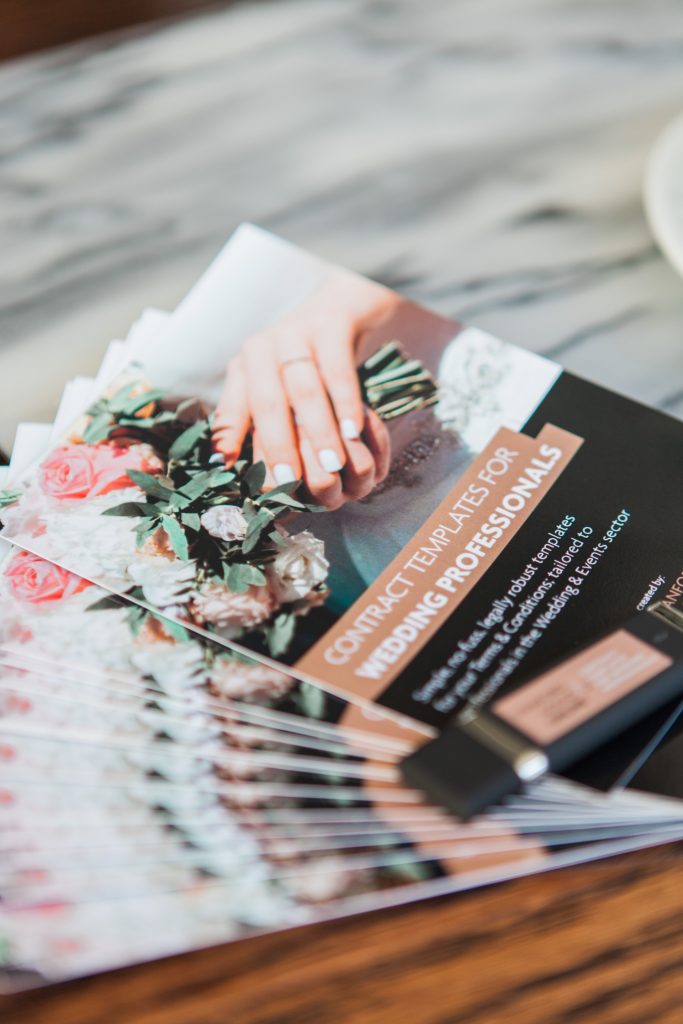
Our brand new, totally free legal jargon busting document is available as a download from our website, Stanford Gould Online. It’s designed for use alongside our fuss-free, legally robust contract templates for wedding professionals, to enable you to set out your Terms & Conditions to your customers. This is also a super useful free tool for any of our existing customers who have already downloaded and are using our templates in their business.

Our template checking service is available to amend clauses and check the template, however it doesn’t include general advice about the meaning of clauses. This legal jargon busting download unpacks as much as possible so you can understand and explain your contract to your customer or client.

legal jargon busting

Making complex legal terms within contracts more simple is what we do – our testimonials frequently attest to that; after all, Stanford Gould’s Heather is known as the Legal Fairy Godmother to the Wedding Industry!

“Heather completely understood my requirements from the very get go and the clear, logical and thorough advice and support she has provided to both me and my business has thankfully been both jargon free and invaluable.” – Katrina Otter, Katrina Otter Weddings

jargon busting guide

Examples of the frequently asked questions included in the document are…

‘Why is everything capitalised in the definitions section?’

‘Can I change the word deposit to something else?’

and 

‘Would you recommend a Covid-19 specific clause?’

Since you’re here, we’ll give you one jargon busting tip now and you can find the rest by following the instructions at the bottom to grab your free guide.

legal jargon explained

So why IS everything capitalised in the Definitions section?

Put simply, it’s a legal convention that when you define something in a contract (for example Client or Event fees) and add speech marks “…” around it, that definition then applies throughout the document wherever that word appears.

This means if you refer to the Client, you mean the one specifically defined in the contract. If you refer to the client (no capital) that could be anyone. 

TIP: if you add or amend anything in your template, make sure to use capital letters for anything defined in the first section throughout the rest of the document.

Find your specific contract template for your business type HERE – we’ve got some brand new ones as of April 2021 to cover even more wedding business types! Then find your free jargon busting document HERE to use alongside it, and wow your customers with your professional and knowledgeable set up.

Your Legal Fairy Godmother; The Wedding Pro Cast

This week Your Legal Fairy Godmother headed to the Society of Professional Wedding Vendors, and I talked all things wedding industry contracts with Donna. You can listen to The Wedding Pro Cast episode on all good podcast platforms, and whether you already have a contract in place or not (especially if not!), it’s full of helpful tidbits and advice!

#YourLegalFairyGodmother

In the podcast I talk about how my widely used hashtag ‘Your Legal Fairy Godmother’ came about to help bridge the gap between the creative wedding industry and the more formal law world. I recognise that they’re not sexy, fun or an exciting part of running a business, but coming from a dispute resolution law background I know how vital they are. Stanford Gould Ltd was born out of a desire to help small businesses get the important contractual ‘stuff’ in place in an accessible way – and eventually Stanford Gould Online was created to dial in on the wedding industry niche I’d begun to see opening up. 

your legal fairy godmother

Biggest Mistakes

I briefly talked to Donna about the three biggest contract mistakes I see people make, and these can be within wedding industry contracts or from any other small business. The first is user-friendliness! People make the mistake of thinking that just because it’s full of ‘legal jargon’ it must be a good contract, but in a nutshell if neither you nor your customers and clients understand it, it’s no good to either of you!

Secondly, people often make amendments and additions to their contracts as time goes on and problem scenarios crop up. However, this can lead to conflicting clauses in different parts of the contract which can in turn land you in hot water! I develop on this point and give examples in the podcast episode. 

The third mistake I so often see in wedding industry contracts is missing liability clauses. Particularly as a sole trader, it’s your assets (car, house, pension…) on the line if you have to pay up. Limiting your liability and protecting this is a MAJOR reason to have a properly created contract!

Your Legal Fairy Godmother’s 3 Top Tips for Contracts

Donna also asked about my three top tips for contracts for your business. Number one on the list in bold, underlined and with gold fairy dust all over it is simply this – HAVE ONE, and have it in writing! Your clients will think more highly of you if you produce one at the right time and get them to sign it, particularly in a world altered by the pandemic. 

My second tip is to make it understandable – make sure you know what it all means, and your clients do too. This is one thing we pride ourselves on with our wedding industry contract templates – they have the necessary legal terminologies but without being unfriendly and hostile to read. 

My third tip is very simple – USE your contract. Don’t set yourself up for a fall by not producing your contract on every single sale or booking. 

Do I Need An Update?

On the episode we also discussed times when you might need to update, revisit or change your contract. First and foremost, if you don’t yet have one in place then make it your next priority. Consider spending less on things to drive more sales and make sure your contractual responsibilities are met – starting with a contract template is the easiest and most affordable way to do this. 

If you haven’t had your contract reviewed since the pandemic begun, now is probably a good time to revisit it and make some amendments. I recommend annually or bi-annually reviewing your contracts.

Other reasons to change your current contract include changes or additions to your services (particularly if you’ve expanded into training – see THIS BLOG for more on that), increases in your prices or changes in the way they are paid, or if your insurance broker changes your cover. 

your legal fairy godmother

To see our options for wedding industry contract templates, CLICK HERE – if you’re reading this before 12th April 2021 then lucky you as our prices will be increasing! Grab your contract now to lock in the current price. If you don’t see one that fits what you do exactly, don’t hesitate to send us a message on Instagram (@stanfordgouldgroup) or Facebook (Stanford Gould Limited) – we will be introducing a set of new contracts within the coming months, so we can advise on whether we’ll have one for you in the near future!

With thanks again to Donna at the Society of Professional Wedding Vendors.

Your Legal Fairy Godmother

Terms and Conditions for Online Courses – Considerations

If 2020 taught us anything, it’s that the Wedding Industry is nothing if not a resilient community. Anyone else heartily fed up of the word ‘Pivot’!? In any case, last year wedding suppliers found themselves without weddings to supply…but the camera shutters weren’t silenced, the flower stems did not remain un-trimmed, the cocktail shakers couldn’t be stopped from mixing. Training and coaching services have experienced a boom!

Wedding suppliers from a variety of fields and backgrounds took their creative talents and adapted them, into brand new services in many cases. If you are one such supplier you may have chosen to begin sharing the skills you base your business around, launching training videos, coaching courses and teaching programmes. For skills-based suppliers such as photographers and florists, this may be part of your ongoing business plan for the remainder of 2021 and beyond. If your intentions are to exchange your knowledge for your fellow industry suppliers’ money, there are a few contractual considerations you’ll need to be aware of first. Here are our tips surrounding terms and conditions for online courses.

image shows a wooden table with some green and white foliage spread out on the left, a pair of scissors in the upper right, and a small a5 card with a drawing of a flower on in the centre

Things to Consider:

If you’re launching, or indeed have launched, some form of a training session or course for industry folk and/or couples, many hours of time, careful planning and expert content creation will surely have been put into these endeavours. These are, effectively, new services. Think back now to when you created the services you currently offer; you decided on an offering, what was included and what wasn’t, and you set a price. Your clients began to book in a steady stream, distributed evenly across the year (we can dream, right!?)…when they booked, you sent them a copy of your Terms & Conditions to sign and away you went!

The point is, your new offering needs to undergo the same process. If you currently do not have Terms & Conditions for online courses, or your current contract doesn’t reflect some of the nuances of your new service, you need to review this. If you’re seeking help with writing Ts&Cs that accurately reflect your offering and process, follow THIS LINK for easy-to-use contract templates specifically for Coaching & Training – these are not the same as your day-to-day contracts!

You also need to check that you are insured to provide these new services – don’t assume that they are automatically covered under your existing business insurance policy. Tell your broker about changes to the way you work or deliver and then you can ensure that they are included, often for no more premium. But if you fail to inform the insurer of such changes, this gives rise to the real risk of the WHOLE insurance cover being refused in the event of claim, whether as a result of the use of your existing or these new services. Be careful!

the image shows a laptop from above with hands typing on it. brown sleeves are visible.

Terms & Conditions for Online Courses:

Robust terms and conditions for delivering online training to your customers should include several key clauses, but these may have significant differences to your existing Terms of Business. Are you now supplying Business to Business? That makes a very big difference to what you can and can’t have in your contract.  The Stanford Gould template offering covers the following items, and more…for example, do you take payment in full from your trainee before course commencement? Or do you agree payment in stages? Your contract should deal with this. It should mention your right to suspend your services in the eventuality that you aren’t paid, and your GDPR obligations (yes, that’s still a thing – see HERE for practical tips on this!). It should also limit your liability and make the jurisdiction for any dispute. If these sound like things your current contract does not include, it’s time to look again at your Terms & Conditions before soldiering on with your 2021 training plans.

In summary, if you’re a supplier looking to expand into training and coaching you need to make sure your business is set up legally robustly to deal with this. If 2020 was the year of the Pivot, don’t make 2021 the year that your Terms & Conditions land you in hot water; we’ve had enough of that already! We hope the tips in this blog helped, or at the least reminded you to pop this on the to-do list. 

With all the knowledge-sharing going round, this time next year the Wedding Industry will be overflowing with talent!

Main image by Amanda Karen Photography. With thanks to Megan Wilson for final image.